

Blog

Dental disease is one of the most common, if not the most common, health issue that occurs in cats. A healthy oral cavity in cats is very important for their digestive health and quality of life. Cats use their mouth for grooming, hunting, and eating. Our...
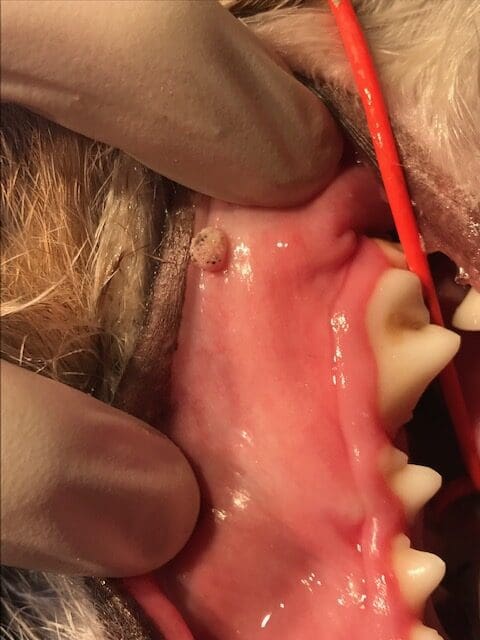
Papilloma Virus, also known as the wart virus, causes papillomas or small, benign tumors in different species. It’s important to note that Canine Papilloma Virus (CPV)  is specific to dogs and is not transmissible to humans. CPV occurs most commonly in young dogs whose...

Oral malodor (pet halitosis or bad breath) is a common condition noticed by pet owners and is often described as “doggy breath” in dogs, and “fish” breath in cats. Most of us are aware that bad breath in humans is considered a social faux pas....

Feedings tubes in cats and dogs are occasionally recommended for our oral surgery patients to help them for a limited period of time in their post-surgical recovery. The most common feeding tube placed in dogs and cats is an esophagostomy feeding tube. “Stoma” refers to opening...

Chewing is a behavior in which all dogs engage. And it’s not just when they are eating that they like to chew. It's used in play, hunting, and eating. Did you know, dog dentition is shaped differently than our own? The majority of dog...

Over the past number of years, you may have heard about groomers, pet shops and even some veterinary providers offering a procedure referred to as Anesthesia Free Dentistry (AFD) or No Anesthesia Dentistry (NAD). These procedures involve the scaling of a dog or cat’s teeth...