


14 Sep Impacted Teeth in Pets: When Teeth Don’t Erupt Normally
Missing teeth are not that unusual in dogs and cats. This is often discovered at the time of an oral examination while a pet is under anesthesia for a dental evaluation and tooth cleaning. However, are they really “missing?”
Impacted teeth are a common finding in dogs and are infrequently diagnosed in cats. The only way to determine if a tooth is impacted is with dental imaging with a patient under anesthesia.
Dental imaging is done with a cone beam computed tomography (CBCT) scan or with dental radiographs. Dental radiographs are reliable for determining if a tooth is impacted, but do not provide nearly as much detail as cone beam CT scans.
Why is it important to diagnose impacted teeth in our canine and feline patients?
Many impacted teeth in pets form lesions referred to as dentigerous cysts. These are slow-growing cystic lesions that over time destroy surrounding bone and teeth.
Dental radiographs can diagnose dentigerous cysts, but they are far less sensitive in finding these cysts compared to cone beam CT scans. Dental radiographs are 2-dimensional shades of gray, while CBCT scans are 3-dimensional and provide far greater bone and dental detail. I have personally treated cases where no dentigerous cysts were found with dental radiographs, only for them to be easily observed on a CBCT scan. This is due to a certain amount of bone needing to be lost from a lesion before it will show up on a dental radiograph. Cone beam CT scans do not have this limitation. Animal Dental Care and Oral Surgery in Colorado Springs was the first veterinary clinic in Colorado to have a cone beam CT unit going back to 2020.
How common is it for an impacted tooth to form a dentigerous cyst?
Dogs with impacted teeth will have cyst formation in 44-57% of cases, while cats with impacted teeth will only form cysts 20% of the time. Cats also have significantly fewer impacted teeth compared to dogs. Humans with impacted teeth only have cyst formation 1.4% of the time. The variation between species is obviously significant.
Once a dentigerous cyst is diagnosed, how is it treated?
Much depends on the size of the cyst. Small cysts that are found early in their development are relatively simple to address. The impacted tooth always needs to be extracted, but the lining of the cyst wall needs to be completely removed, regardless of the size of the lesion. This is called an enucleation. If a cyst has been present for a long time and has grown in size, the surgery is much more involved. For larger cysts, especially ones that involve multiple teeth, it may be most appropriate to have a veterinary dental oral surgeon perform the procedure. Most board-certified veterinary dentists now have cone beam CT units onsite, so advanced imaging can be done. This will aid in forming a surgical plan for the patient.
The most common tooth to be impacted in dogs is the very small single-rooted mandibular (lower jaw) 1st premolar. Brachycephalic breeds, such as Pugs, Boston Terriers and Boxers, have “shorter” faces and jaws and are the most common breeds to have this tooth impacted. Mandibular canines (fangs) are also commonly impacted. Due to the frequency of impacted teeth forming dentigerous cysts, it is advised that most of these teeth be extracted, especially if there are any signs of cyst formation.
What are the potential complications if an impacted tooth is not extracted and its associated cyst is not enucleated?
Cysts will slowly continue to grow and compromise surrounding teeth, some of them very large teeth, such as fangs. They also slowly resorb bone and weaken the jaw. If they are in the lower jaw, this may reach the point where the jaw may fracture. These cysts can also compromise large blood vessels that supply bones of the upper and lower jaws. Fortunately, dentigerous cysts are rarely infected, but bacterial infection remains a potential risk.
Impacted Teeth in Pets: Meet Ruby
In 2020, I personally adopted an 8-week-old female Red Heeler puppy who presented to Animal Dental Care and Oral Surgery with a significant facial swelling. My family named this adorable puppy “Ruby,” and she quickly became a big part of our family. Ruby was a “rescue” puppy from a shelter and needed a home. A cone beam CT scan revealed multiple impacted teeth in her maxilla (upper jaw) with a large dentigerous cyst. After I extracted the impacted teeth and enucleated the cyst, Ruby made a great recovery. She has had her teeth cleaned under anesthesia at least once a year, with follow-up cone beam CT scans that have revealed the cystic area has filled in nicely with remodeled bone.

Figure 1 Ruby Vall as an 8-week-old puppy had multiple impacted teeth that caused a dentigerous cyst
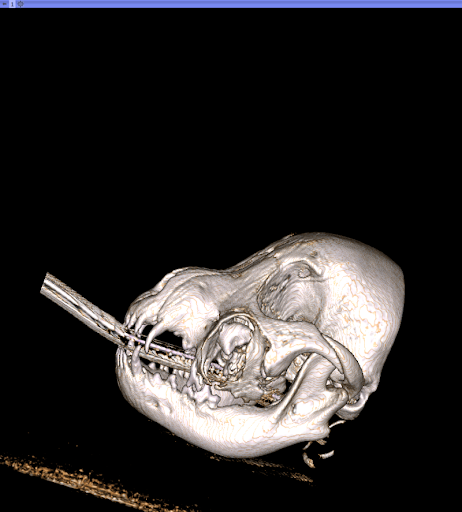
Figure 2 This is a 3D cone beam CT image of the large dentigerous cyst Ruby Vall had as a puppy. An impacted tooth is visible within the cyst.
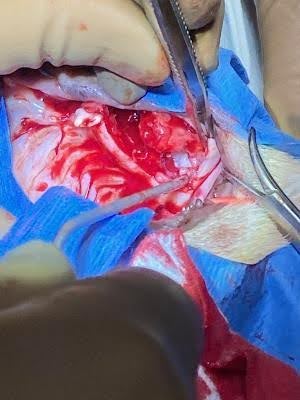
Figure 3 Extraction of impacted teeth and enucleation of a dentigerous cyst in Ruby Vall
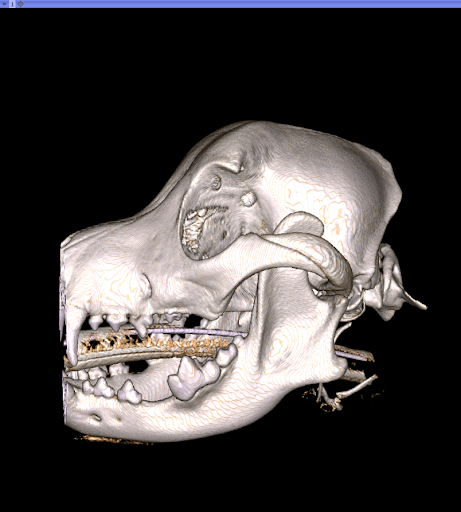
Figure 4 Cone beam CT scan of Ruby Vall 6 months after surgical treatment of her dentigerous cyst. Bone reformation is observed over the area. Imaging with this detail is only achieved with cone beam CT imaging.
Protect Your Pet’s Oral Health With Proper Dental Imaging
To summarize, dogs and cats with “missing” teeth should have it confirmed that the teeth are truly missing and not impacted. This requires dental imaging b y a veterinarian with your pet under anesthesia. If a tooth is found to be impacted, extraction is most often indicated. If a cyst is diagnosed, it should be enucleated at the time the involved teeth are extracted. Follow-up dental evaluations should be done to be sure the cyst resolves and fills in with bone.
If you have any questions regarding “missing” or impacted teeth in your pet, please feel free to reach out to Animal Dental Care and Oral Surgery in Colorado Springs at (719)536-9949 or info@wellpets.com to schedule a consultation with one of board-certified veterinary dentists or dental residents.
Photo by Hendo Wang on Unsplash used with permission under the Creative Commons license for commercial use 09/14/2026