
04 Feb Impacted Teeth in Dogs: When Teeth Don’t Erupt Normally
At Animal Dental Care and Oral Surgery in Colorado Springs, Colorado, we frequently see dogs who appear healthy but are living with hidden dental problems. The only way to find these problems is most often under general anesthesia. Only then can we complete a thorough oral exam and dental imaging in the form of dental radiographs or cone beam computed tomography. I have always informed our pet owners and my veterinary dental students that easily well over half of the pathology I diagnose in my patients is when they are under anesthesia.
One of the most common and overlooked conditions we diagnose is impacted teeth in dogs.
When a tooth fails to erupt normally, it can quietly cause serious jaw damage over time. Early detection and professional treatment can remove the risks impacted teeth pose to your dog.
What Are Impacted Teeth in Dogs?
An impacted tooth is a permanent tooth that never fully emerges through the gumline. Instead, it remains trapped beneath the gums or within the jawbone.
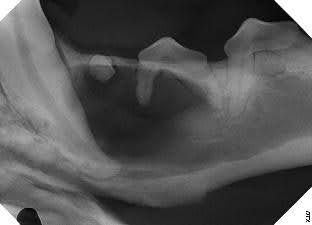
In dogs, any tooth can be impacted, but impacted teeth most commonly affect:
- Canine teeth (“fangs”)
- Premolars
- Incisors
Without professional cone beam CT scans or dental X-rays, many of these teeth remain undetected for years.
Why Do Impacted Teeth Occur in Dogs?
There are several common causes of impacted teeth in dogs:
1. Overcrowding
Small-breed dogs often do not have enough space for all adult teeth to erupt properly. The mandibular 1st premolar is the most commonly impacted tooth in these breeds, particularly brachycephalic (short-nose) breeds, such as pugs or Boston Terriers.
2. Retained Baby Teeth
When puppy teeth do not fall out on time, they can block permanent teeth from emerging.
3. Abnormal Tooth Development
Some teeth grow at unusual angles and cannot break through bone and gum tissue normally.
4. Genetic and Breed Factors
Toy breeds, brachycephalic breeds, and dogs with compact skulls are more prone to dental crowding and impaction. Please see the above note on small-breed dogs.
5. Trauma and Developmental Issues
Jaw injuries or growth abnormalities can interfere with normal tooth eruption. My personal dog, a red healer, was attacked by a large dog as a puppy. Her maxillary molars on one side were damaged prior to them erupting and formed a large dentigerous cyst.
Why Impacted Teeth in Dogs Are a Serious Health Concern
Many pet owners assume that an unerupted tooth is harmless. In reality, impacted teeth in dogs can cause severe oral and systemic health problems if left untreated.
Dentigerous Cysts: A Major Risk
One of the most serious complications associated with impacted teeth is the formation of dentigerous cysts.
These cysts form around unerupted teeth and can:
- Destroy surrounding jawbone
- Weaken the jaw structure
- Displace and compromise healthy teeth
- Increase fracture risk
- Cause chronic pain
Because cysts grow slowly and silently, many dogs show no outward signs until advanced damage has occurred.
Chronic Infection and Inflammation
Impacted teeth can lead to:
- Facial swelling
- Tooth resorption
- Drainage tracts
- Oral pain and discomfort
- Jaw fractures
Dogs often hide dental pain, making professional screening essential.
Damage to Surrounding Teeth
Pressure from impacted teeth or cysts may damage nearby teeth, leading to:
- Root erosion
- Tooth loosening
- Premature tooth loss
- Difficulty chewing
Signs Your Dog May Have an Impacted Tooth
Most dogs show no symptoms until a cyst has progressed extensively, but possible warning signs include:
- Swelling along the jaw or face
- Reluctance to chew hard food
- Oral discharge, if the cyst ruptures
Many cases are discovered during routine dental cleanings and oral exams when diagnostic imaging is performed.
How We Diagnose Impacted Teeth at Animal Dental Care and Oral Surgery
At Animal Dental Care and Oral Surgery in Colorado Springs, we use advanced diagnostic tools to detect hidden dental disease.
Comprehensive Oral Examination
We carefully evaluate your dog’s bite, teeth, gums, and oral tissues.
Cone Beam Computed Tomography and Digital Dental X-Rays
Cone Beam CT scans allow us to identify:
- Hidden impacted teeth
- Early dentigerous cysts
- Bone loss
- Root abnormalities
- Jaw pathology
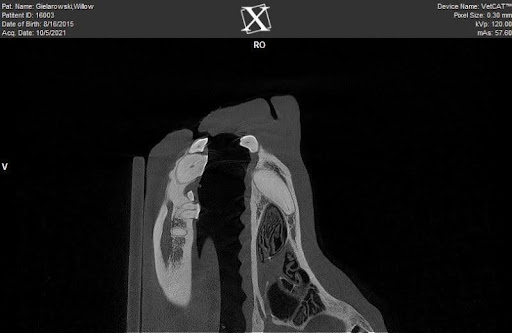
Full-mouth dental X-rays are essential for accurate diagnosis and treatment planning in the general practice setting.
Animal Dental Care and Oral Surgery in Colorado Springs is proud to have been the first clinic in the state of Colorado with a cone beam CT (CBCT) unit. CBCT scanning is the diagnostic tool of choice for diagnosing and surgical planning for a dentigerous cyst and any other oral cyst. These images are in 3D and allow a far better analysis of the cyst when compared to dental radiographs. Some dentigerous cysts are too small early on to be detected by dental radiographs, but will be readily observed by CBCT scans.
When Is Surgical Treatment Recommended?
Not every impacted tooth requires immediate removal, but most should be treated surgically soon after diagnosis.
Surgery is typically recommended when:
- A dentigerous cyst is present
- Bone loss is occurring
- Infection or inflammation is detected
- Preventive removal reduces future risk
Early treatment often prevents more complex and costly procedures later, such as treating jaw fractures after a cyst has weakened and resorbed surrounding bone.
What Does Impacted Tooth Surgery Involve?
Surgical treatment is performed under carefully monitored general anesthesia by our experienced veterinary dental team.
The procedure includes:
- Creating a small incision in the gum tissue
- Removing minimal bone if necessary
- Extracting the impacted tooth
- Removing cyst lining if present
- Closing the site with sutures
We use advanced anesthesia monitoring and pain management protocols to ensure your dog’s safety and comfort. Quite often this involves engaging a board-certified veterinary anesthesiologist to perform livestream monitoring and collaborating with our dental anesthesia certified veterinary technician.
Most patients recover quickly and show noticeable improvement after surgery.
Why Early Detection Matters for Colorado Springs Dogs
When it comes to impacted teeth in dogs, early diagnosis is key.
Early detection allows us to:
- Prevent cyst formation
- Preserve jaw strength
- Reduce surgical risk
- Protect healthy teeth
- Minimize pain
- Lower long-term treatment costs
Routine professional dental cleanings with X-rays provide the best protection against hidden oral disease.
Supporting Your Dog’s Oral Health in Colorado Springs, Colorado
At Animal Dental Care and Oral Surgery, we are dedicated to providing advanced veterinary dentistry and oral surgery services to pets throughout Colorado Springs and the surrounding communities.
If your dog has:
- Retained baby teeth
- Crowded or misaligned teeth
- A short or narrow jaw
- A high-risk breed background
Regular dental evaluations are especially important.
Impacted teeth may be hidden, but their consequences can be significant. With early detection and expert care, we can help your dog enjoy a healthy, pain-free smile for years to come.
Schedule a Veterinary Dental Evaluation in Colorado Springs
If you are concerned about impacted teeth, retained baby teeth, or your dog’s oral health, contact Animal Dental Care and Oral Surgery in Colorado Springs, Colorado, to schedule a consultation.
Our team is proud to serve pets and families throughout the Pikes Peak region with compassionate, specialty-level dental care.