02 May Malocclusion in Pets: When Misaligned Teeth Become a Medical Issue
At Animal Dental Care and Oral Surgery, we believe every animal is entitled to a pain-free bite (occlusion). When pets have a malocclusion, or an improper alignment of the jaw bones and/or teeth, this can not only be very painful but can also lead to more issues down the road. Malocclusions can occur in puppy/kitten teeth or with their adult teeth. Malocclusions can cause damage to the gingiva/mucosa (gum tissue), bones of the mouth, and other teeth. When malocclusions lead to trauma of the gums, bones, or teeth, it is painful, but dogs and cats are so stoic that they often do not show us any signs of pain.
What Is Malocclusion in Pets?
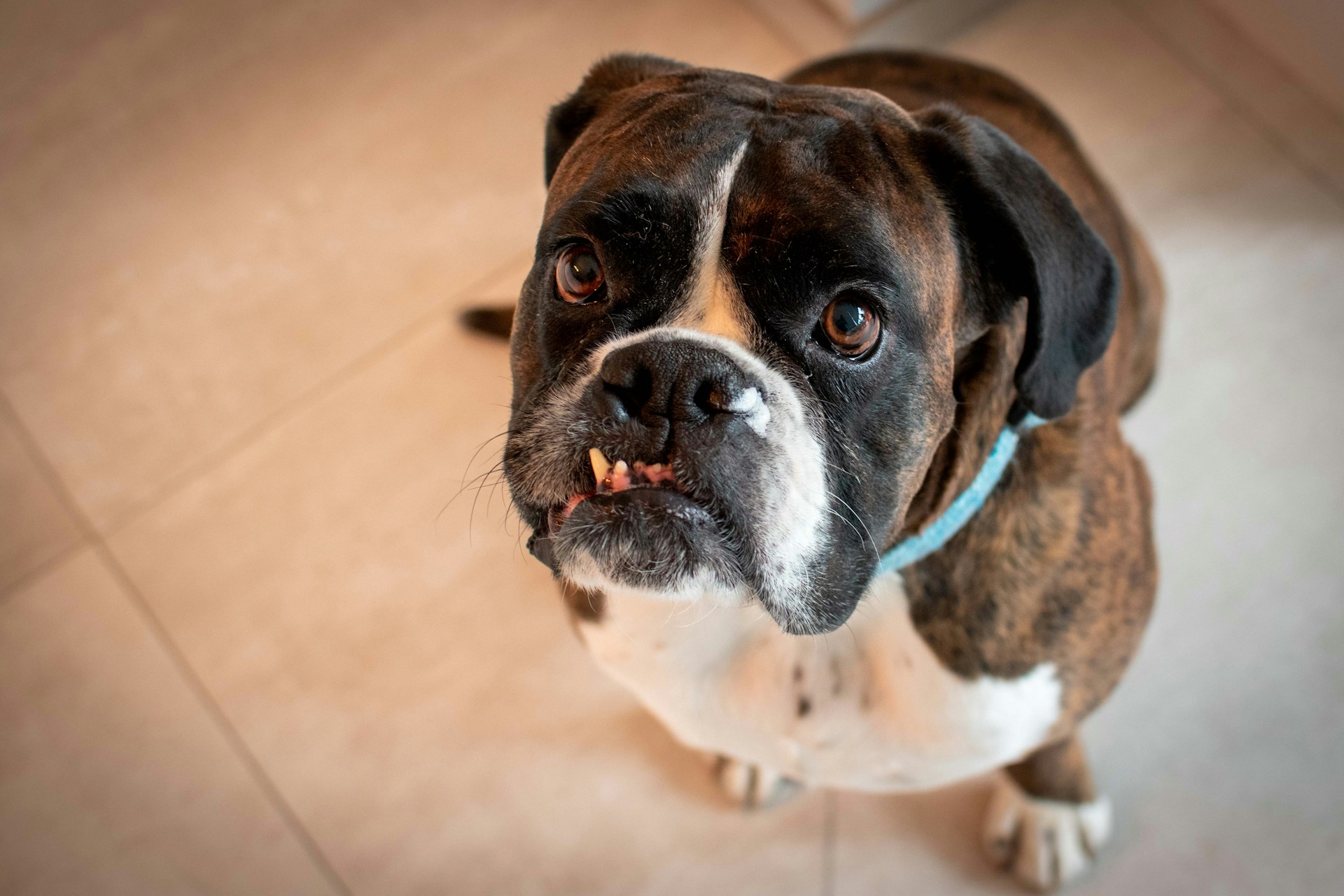
Some common types of malocclusions include an overbite (the upper jaw protrudes farther than the lower jaw) and an underbite (the lower jaw protrudes farther than the upper jaw), which are types of skeletal malocclusions. Sometimes it is not a problem with the length of the jaws, but a problem with the positioning of the teeth.
How Malocclusion in Pets Causes Pain and Oral Damage
One example of this is when the lower canine (fang) teeth come in too narrowly and cause trauma to the roof of the mouth. Not only is a bite like this painful, but if left for too long, it can cause destruction of the bone of the roof of the mouth, eventually leading to the lower canine teeth entering the nasal passages.
Common Types of Malocclusion in Dogs and Cats
Overbite vs. Underbite (Skeletal Malocclusions)
Some common types of malocclusions include an overbite (the upper jaw protrudes farther than the lower jaw) and an underbite (the lower jaw protrudes farther than the upper jaw).
Tooth Positioning Issues and Narrow Canines
Sometimes it is not a problem with the length of the jaws, but a problem with the positioning of teeth, such as when the lower canine teeth come in too narrowly.
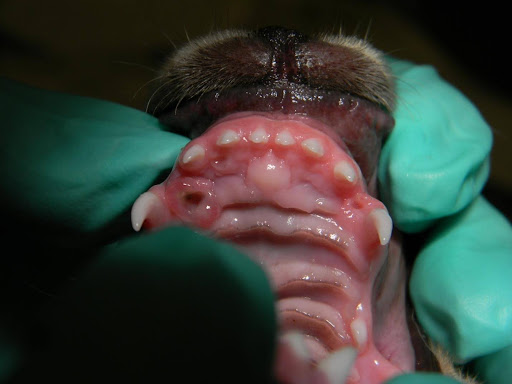
The above image shows the impact point of a base narrow mandibular canine deciduous (baby) tooth on the palatal tissues. These teeth should be extracted as soon as possible to alleviate the associated pain of the abnormal occlusion.
When Malocclusion in Pets Requires Treatment
Not every malocclusion in dogs and cats requires treatment. If a dog or cat has misaligned jaws and/or teeth but can close their mouth fully without pain and abnormal contact between teeth and other structures of the mouth, it does not require treatment. It is considered unethical to treat a malocclusion in animals for only cosmetic reasons, as treatment would require putting an animal under unnecessary general anesthesia. If your dog or cat has an abnormal bite, you can schedule an appointment to have one of our veterinarians at Animal Dental Care and Oral Surgery assess your pet’s bite and determine if treatment is required.
Treatment Options for Malocclusion in Pets
There are multiple ways malocclusions can be treated in dogs and cats:
Extraction
Extracting teeth due to a malocclusion can relieve the source of pain and allow an animal to close their mouth fully, but the animal loses the function of that tooth. Especially if it is a strategic tooth like a canine (fang) tooth, we like to save these teeth.
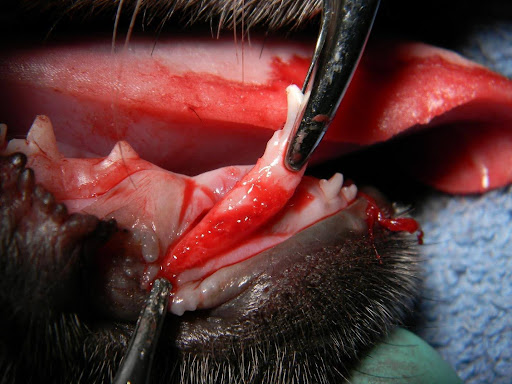
Extraction of a mandibular (lower jaw) deciduous (baby) canine tooth.
Tooth movement with passive appliances
Moving teeth is another way to relieve the pain and trauma of a malocclusion. One way to move teeth is by applying acrylic appliances such as crown extensions or an incline plane, which work with the passive bite force of the animal to move the teeth over the course of weeks.
Active force appliances (braces)
Less commonly, we can also apply active force appliances, essentially braces, to move teeth into a pain-free position. Movement of teeth does not always put them in their natural position within the mouth, but as long as the bite is not painful anymore, it is considered a success.
Crown reduction with pulp therapy
Another more common way we treat malocclusions is by shortening the tooth by cutting the crown of the tooth down. When we do this, we often expose the blood and nerve supply of the tooth (the pulp), so we place a pulp cap to seal the tooth and make sure it is not painful and does not get infected later.
Why Early Treatment Matters for Puppies and Kittens
All treatment options have their advantages and disadvantages, and our doctors can walk you through the different treatment options that are appropriate for your pet. When pets have a malocclusion that is causing pain, a wait-and-see approach is never appropriate. Even if it is their puppy or kitten teeth that are causing the trauma, these teeth should be extracted as early as possible to relieve them of their pain and give them the best chance of developing a pain-free bite with their adult teeth.
When a puppy or kitten has a malocclusion with their puppy/kitten teeth, they may or may not have a malocclusion with their adult teeth. When their adult teeth start erupting, it is important to have them rechecked to make sure their adult teeth are not going to cause a problem, too.
Can Pets Develop Malocclusion Later in Life?
Malocclusions often occur in puppies and kittens, but they can occur later in life as well. If an animal develops disease such as severe periodontal disease that causes mobility of teeth, this can lead to teeth moving into a traumatic, painful position. If you notice changes in the position of your pet’s teeth, this can be a sign of an underlying disease that needs to be investigated and treated.
Early Care Protects Your Pet’s Comfort and Prevents Long-Term Damage
In dogs and cats, a malocclusion is not just about how their smile looks. It is about their comfort, health, and quality of life. Early detection and treatment are essential so an abnormal bite does not cause continual pain or lead to more problems down the road. If your pet has a malocclusion, please call to schedule a consult with one of our veterinary dentistry specialists at Animal Dental Care and Oral Surgery in Colorado Springs.